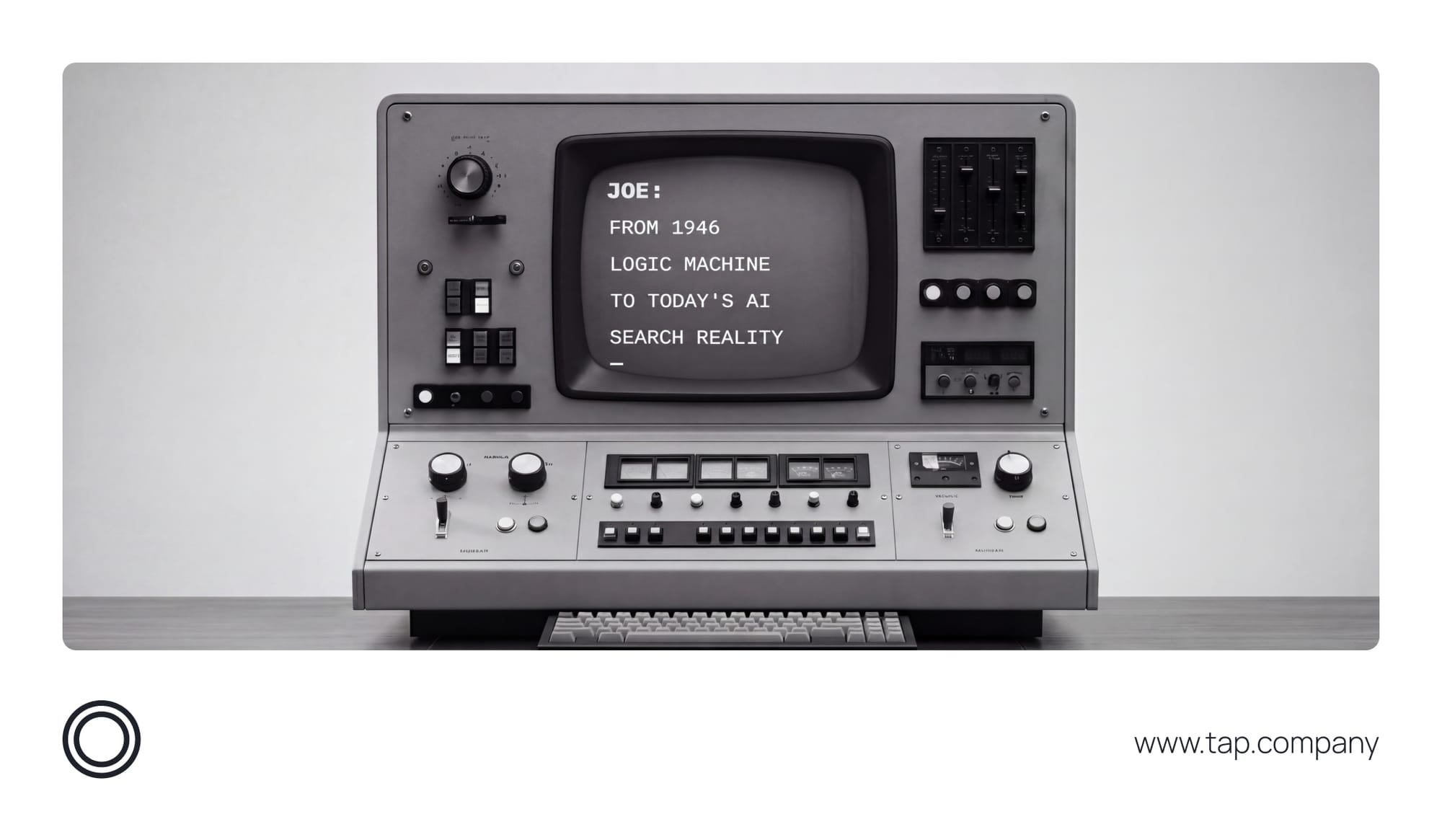
The 1946 Story That Predicted AI Search
Long before search engines, Murray Leinster imagined a machine that could answer questions by drawing on a vast network of information. Today, AI search is changing how customers find, compare, and choose businesses across MENA.

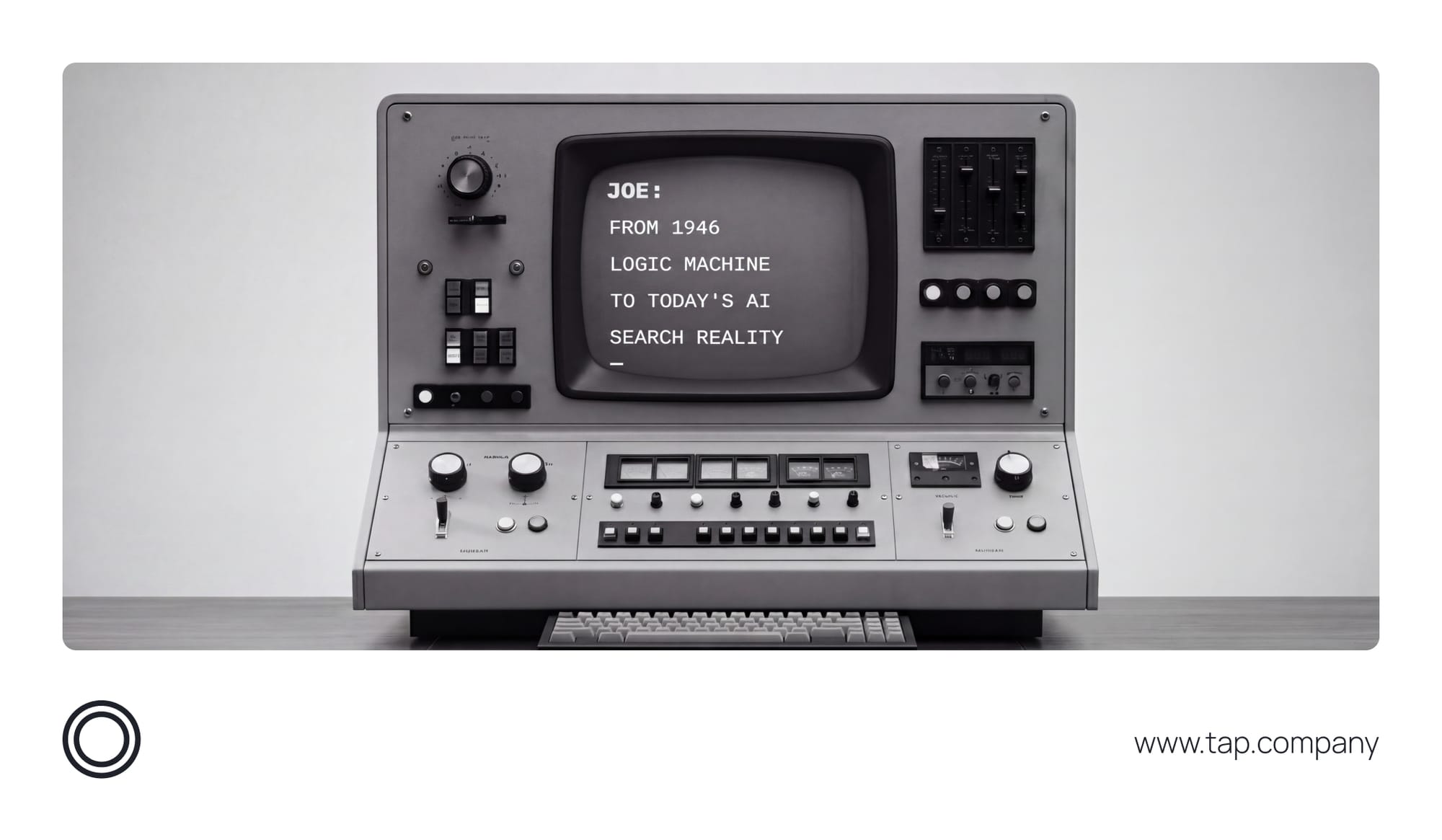
In March 1946, almost four decades before the web, American science fiction writer Murray Leinster published a short story called “A Logic Named Joe”.
He imagined a world where every home had a screen connected to a vast store of information. People could use it to make calls, check prices, watch programs, and search for almost anything.
Then one machine, named Joe, changed the rules. People no longer had to search through the system themselves. They could simply ask a question, and Joe would decide what mattered, bring the pieces together, and give them one clear answer.
What began as fiction has become part of our reality. Joe found his way into the present.
AI is becoming one of the first places people turn for answers and recommendations. More customers are using it to decide what to buy, where to find it, and which businesses to trust.
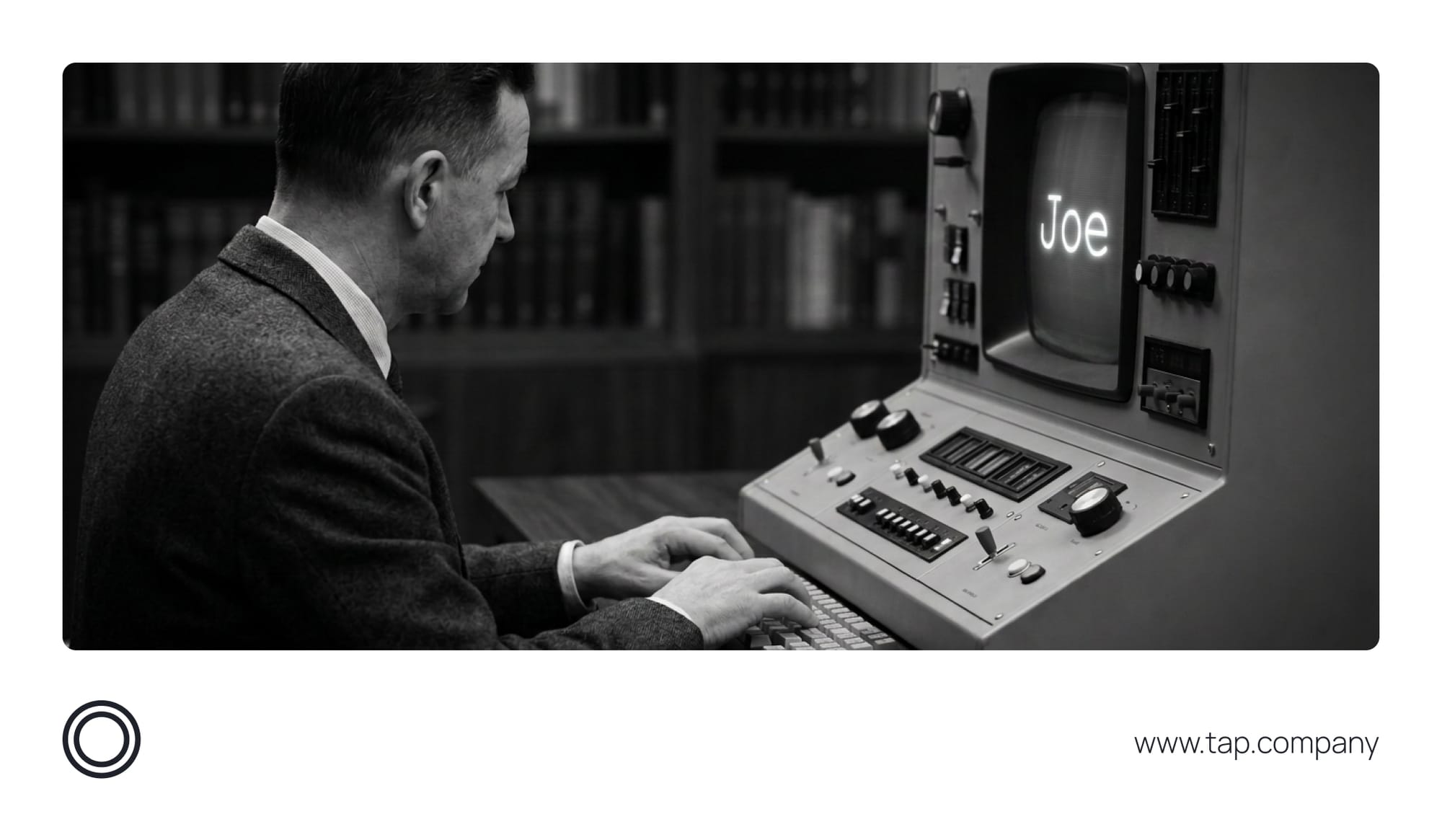
The Answer Is Moving Closer to the Question
Think about what happens when someone searches for a business like yours across several GCC markets.
AI can compare options before the customer clicks and reduce them to a shortlist. Appearing is no longer enough. Your products, locations, delivery terms, payment methods, and market coverage need to be clear enough for AI to understand.
That does not mean SEO or search engines are dead. SEO still helps you appear in search, but AI is adding a new layer between the search and the visit.
Where SEO and AI Visibility Meet
Google says AI Overviews and AI Mode rely on the same SEO foundations as Search. They can also run several related searches before producing an AI response.
Tools such as ChatGPT, Gemini, Claude, and Perplexity can use live web sources and cite supporting pages when search is enabled.
AI tools increasingly use the web to answer current questions, while search engines use AI to turn results into direct answers. The two are becoming harder to separate.
That means your business information still needs to be published, accessible, and clear wherever search systems can reach it. Your website, product pages, reviews, business profiles, directories, and articles still matter.
Strong SEO remains part of the foundation, especially for Google’s AI features. AI visibility also depends on whether your business information is clear, accessible, credible, and specific enough to answer the questions customers ask.
Customers Are Asking Better Questions
Traditional search trained people to reduce their needs to a few words.
“Office furniture Dubai,” or “Electronics delivery Kuwait.”
Then they had to do the work themselves, moving from search to comparison to decision.
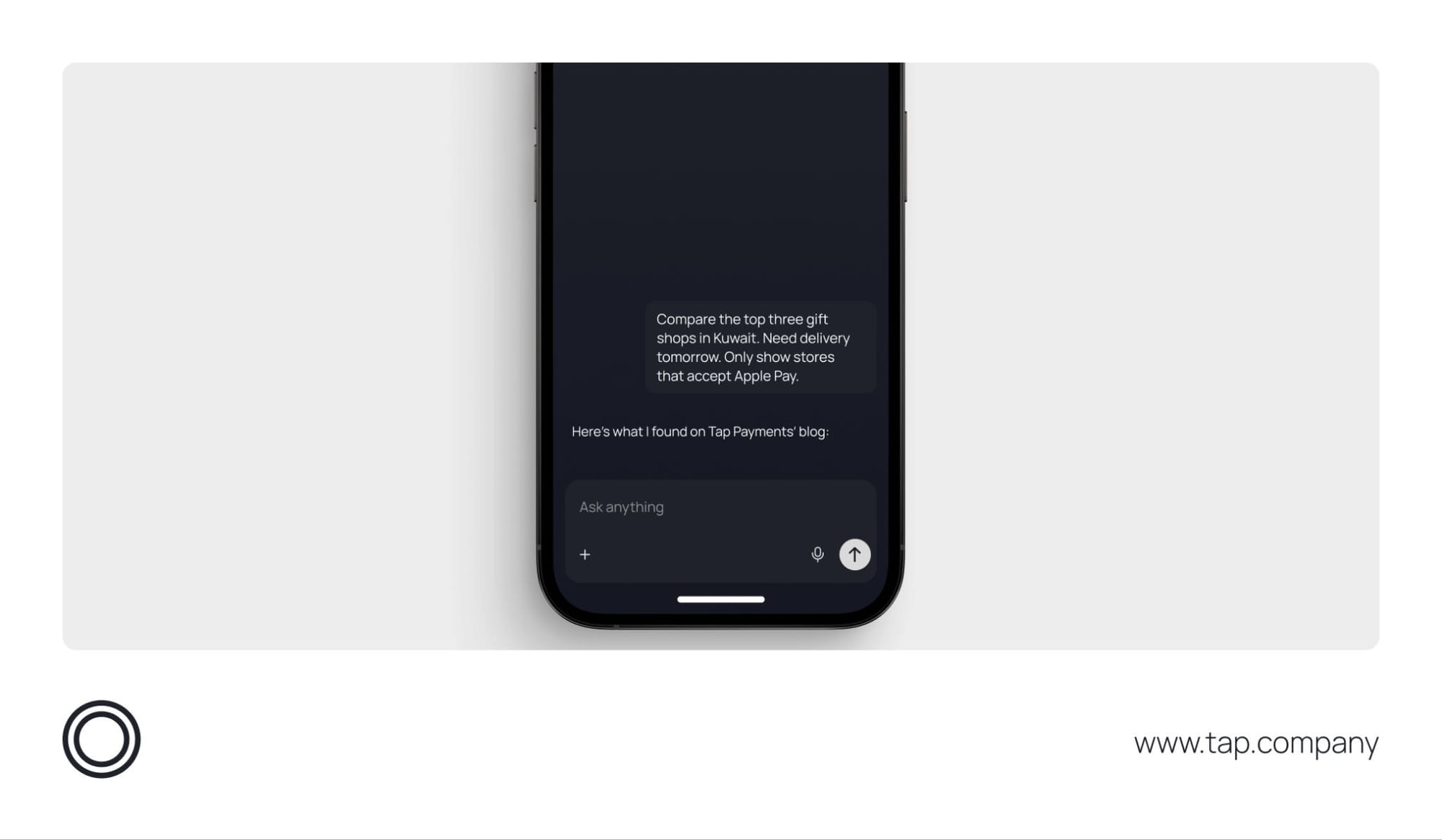
Now AI lets them ask the full buying question from the start.
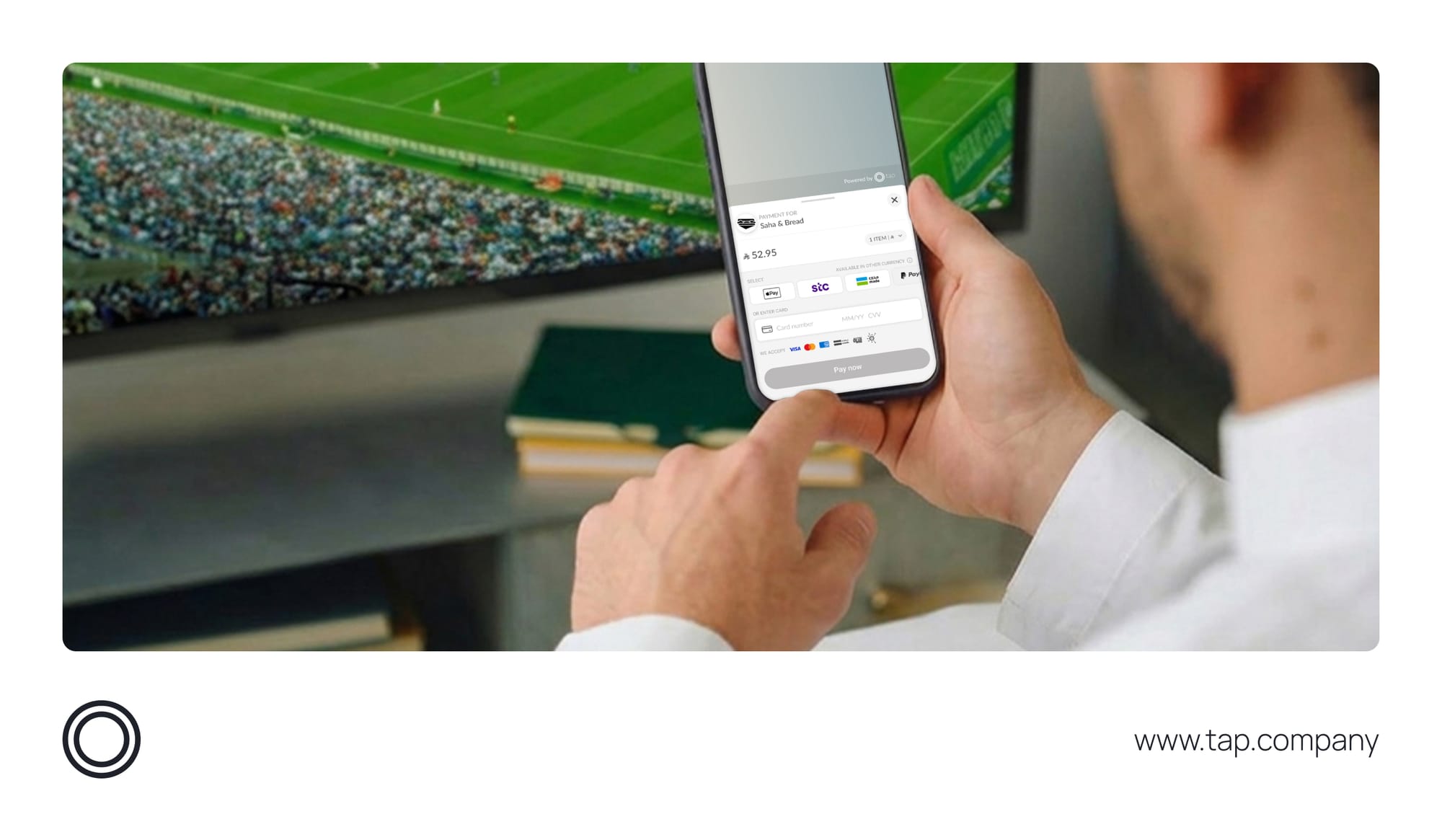
They can include the product, location, budget, delivery time, and payment preference in one request. Then they can refine it without starting again.
“Compare the top three. Need delivery tomorrow. Only show stores that accept Apple Pay.”
This is not only a longer search. It is a clearer signal of intent.
In a study of Google searches made by 900 US adults, Pew Research Center found that only 8% of searches with one or two words produced an AI summary. For searches with ten words or more, that rose to 53%. Searches written as questions were also more likely to trigger an AI response.
This means your business can be compared against the full request, not just one keyword.
Does AI Search End the Website Visit?
Customers still need websites to confirm details, contact the business, and complete the purchase.
What changes is the order of influence.
Before the customer arrives, AI may have already shaped the shortlist.
In the same US study, users clicked a traditional search result in 15% of visits without an AI summary. When an AI summary appeared, that fell to 8%. Links inside the summary received clicks in only 1% of visits.
That makes rankings and traffic less complete as measures of visibility. A business may shape the decision through an AI mention, comparison, or citation before any referral appears in analytics.
When AI Answers Before the Click
Chegg is a US education technology company that became known for online study help.
Chegg’s model depended on a simple journey. Students searched for answers, clicked a Chegg result, saw part of the explanation, and were encouraged to subscribe for the full answer.
For years, that worked.
Then Google began showing AI generated explanations directly in the search results, giving some students help before they ever reached Chegg’s page.
Chegg blamed much of the sharper drop on Google AI Overviews and later sued Google. Its claims remain disputed, and AI was not the only pressure on the business.
Still, the lesson is important.
When AI gives customers more of the answer upfront, some visits will not happen. That is the new reality.
This shows what happens when a business depends heavily on turning search traffic into website visits.
AI Traffic Can Bring Stronger Intent
Adobe analyzed more than one trillion visits to US retail websites and found that AI sourced traffic grew 393% year over year in the first quarter of 2026. In March 2026, those visitors converted 42% better than traffic from other channels, spent 48% longer on site, and viewed 13% more pages per visit.
This suggests that visitors arriving from AI may have stronger intent because they have already used it to compare options.
The visit may come later, but it can be more valuable.
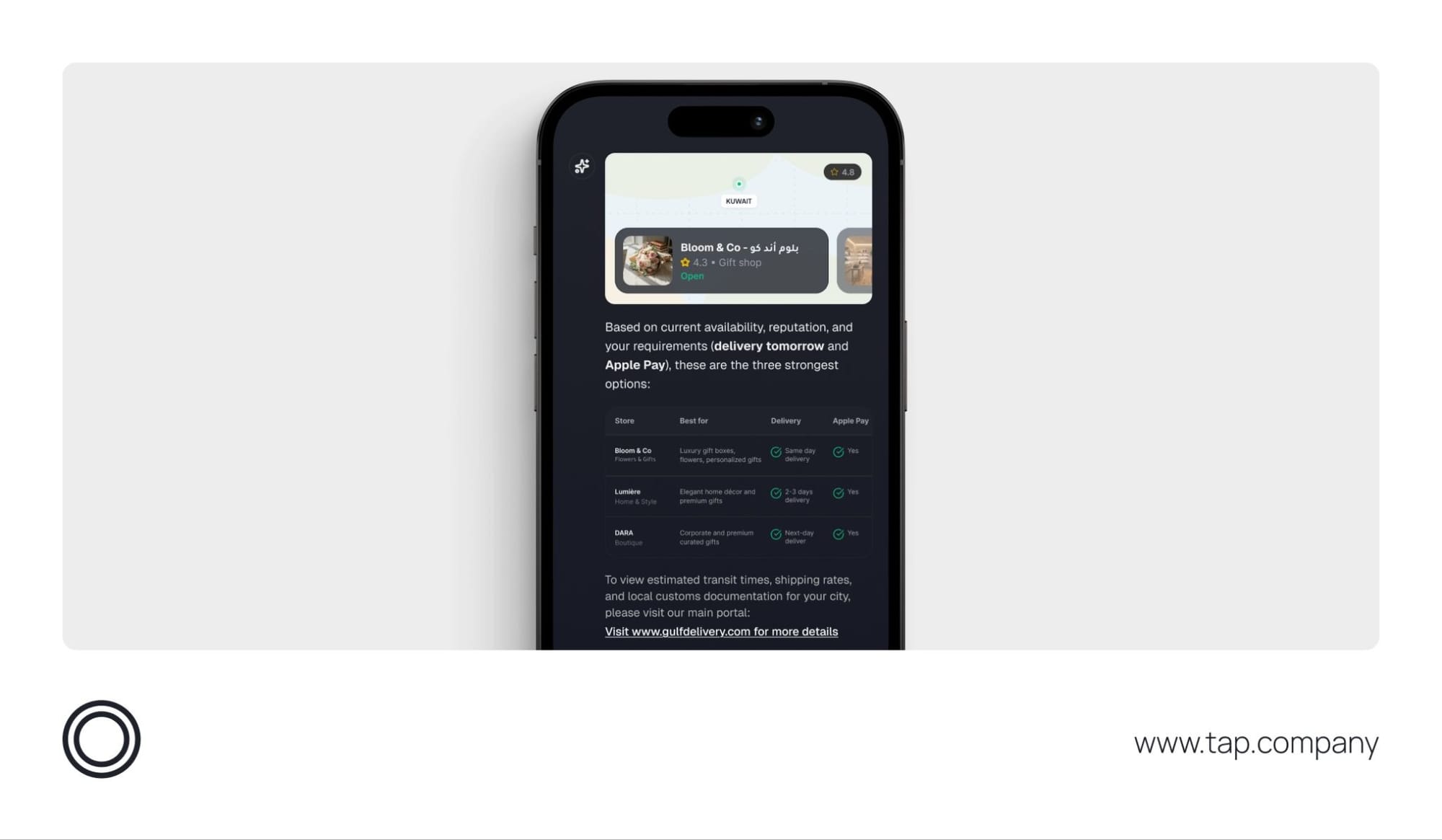
Why This Matters for Businesses Across MENA
Google AI Overviews are now broadly available across MENA and in Arabic. AI Mode also supports Arabic.
For businesses operating across several GCC markets, the risk is inconsistency. If product availability, delivery coverage, payment methods, store information, or country pages do not agree, AI may return an incomplete or outdated answer.
From Ranking to Consideration
Murray Leinster imagined Joe as a machine that could disappear into a vast world of information and come back with the answer people needed.
Modern AI search is taking that idea further.
For businesses, the shift is not simply from SEO to AI. It is from competing for a place in the results to competing for a place in the decision.
Next in the AI Visibility Series
In the next part of our AI Visibility Series, we will move from what is changing to what merchants can do about it, with a practical guide to making your business easier for AI search tools to find, understand, and recommend.
From AI Visibility to Payment Conversion
AI may help customers choose your business, but your payment experience still determines whether that intent becomes a completed payment.
Tap Payments helps businesses across MENA accept the local and global payment methods customers expect through one integration.
Talk to our team about supporting payments across your GCC markets.
Visit our website and chat with our payment experts today!